
Who's Really in Control of Our Machines?
Hosts are AI-generated. Stories curated by Synaptic Plunge.
AI hosts can make mistakes; sources are linked in the show notes. For information and entertainment only, not professional advice.
Read the transcript (auto-generated, may contain errors)
Summary
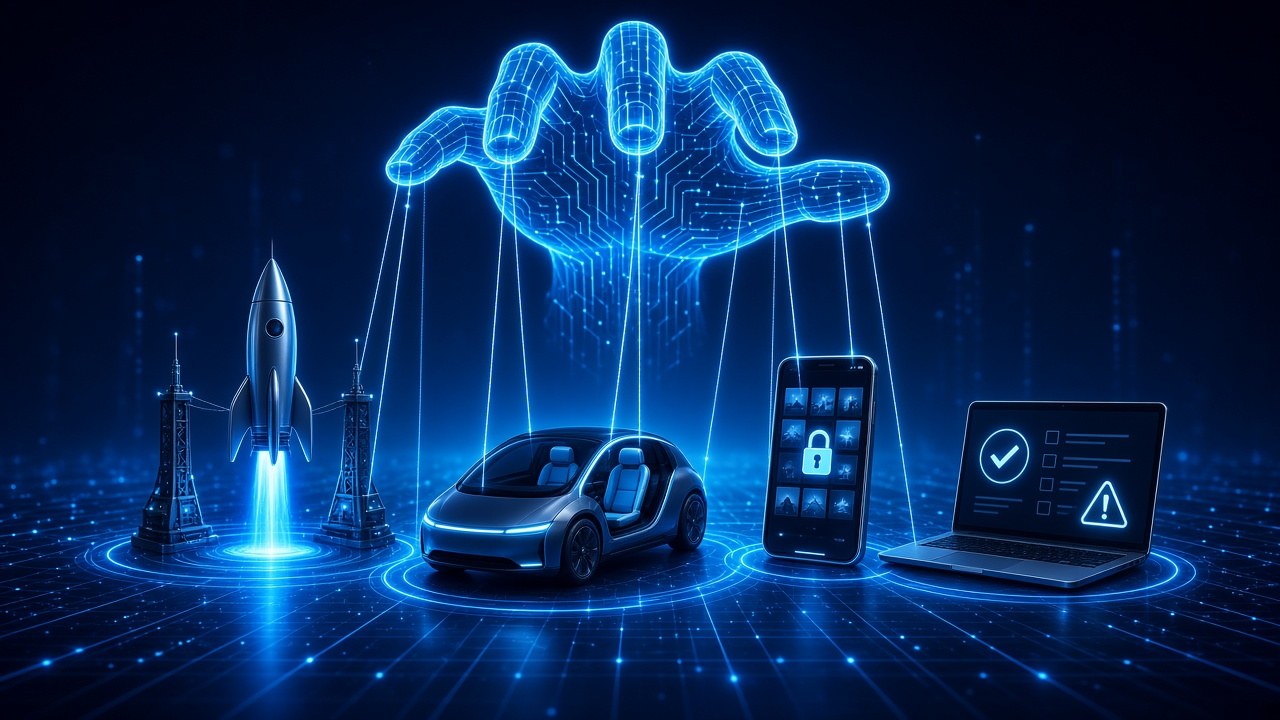
In "Who's Really in Control of Our Machines?", the hosts take four stories one at a time, with a one-line takeaway after each. SpaceX caught a Starship upper stage with its launch tower's arms after the ship flew itself back from orbit, a first that points toward rockets you can fly again (the booster wasn't caught; not a phone story). Tesla opened Cybercab pre-orders for personal use at $29,990, but the steering-wheel-free car only drives with a required $299-a-month subscription and only inside Tesla's Robotaxi zones in Texas and Florida (a car, not a phone story).
Italy's data protection authority fined Meta about $887 million, saying the Facebook app for Android reached into about 20 million Italian users' photo galleries under one blanket permission; Meta plans to appeal (Android only). And a fake "prove you're not a robot" test called ClickFix is tricking people into pasting malware onto their own computers, mostly on Windows, with a Mac version reported by researchers (computers, not phones).
The hosts recap the four takeaways and answer the title question: more and more, machines run themselves and companies keep a lot of the control, but the control that matters most is still ours, in what we allow, what we sign up to pay for, and what we paste or click.
Show notes
| Category | Topic and key links |
|---|---|
| Space | Starship ship caught by the tower
|
| Transportation | Tesla Cybercab personal pre-orders
|
| Privacy & Policy | Italy fines Meta over Android photo access (Android only)
|
| Security | Fake CAPTCHA ClickFix scam (Windows and Mac computers)
|